Lexus
Lexus GX460 (J150, 2010–2023)
$20k – $55k typical used · Premium+ trims higher. Specs below cite factory payload, clearance, and cargo where available; remaining-payload after occupants and gear is our editorial load model. Trims vary — verify on the sticker, placard, and with Lexus before you load up or buy.
Compare note
US production ended 2023 — used market compare only. Lexus GX550 (current gen / Overtrail) →
- Reliability vibe
- 9/10
- Ground clearance
- 8.1″ rep.
- Payload (approx.)
- 1,285 lb rep.
- Cargo (approx.)
- 46 cu ft
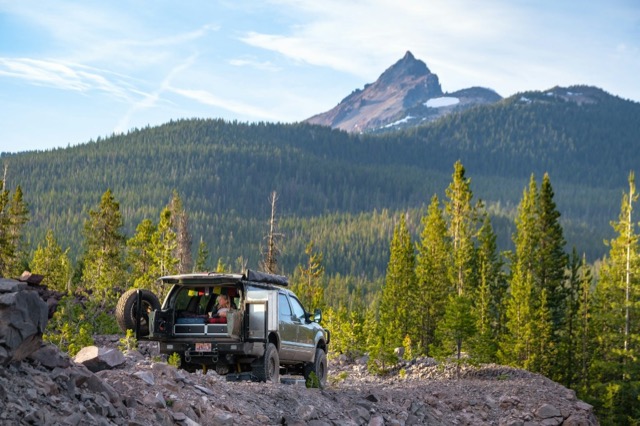
Is the GX460 good for overlanding?
Yes — for luxury trail travel, family dirt-road loops, and long highway legs to camp. It is not a factory-locker crawl rig like a TRD Off-Road 4Runner.
Full-time 4WD, low range, KDSS articulation, and Toyota/Lexus reliability make it a strong moderate-trail platform. Budget for tires, skids, and payload math — and know the swing gate complicates RTT builds.
Quick reality check
Heard this claim?
“A GX460 on coilovers and big tires is just as capable as a Land Cruiser.”
Partially true for moderate overland trails — not an equal swap for hard crawl against a locked full-size Cruiser.
The J150 GX460 is Prado-class (closer to a 4Runner than an LC200/LC300). Coilovers and A/T tires absolutely raise clearance and grip on graded dirt, snow, and many forest roads — that is where the YouTube take holds up. They do not add factory lockers, fix swing-gate RTT planning, or erase payload math. For typical camp loops, a well-built GX460 belongs in the conversation; on wet-rock crawl days, expect to work harder than a locked Land Cruiser.
Payload & trail loading
Editorial ballparks for Lexus GX460 (J150, 2010–2023): empty-truck catalog numbers versus two common overlanding load profiles (two occupants assumed). This is the loaded-reality math factory spec sheets skip.
| Spec Category | Stock Factory Specs | With Mid-Weight Build (RTT + Fridge) | With Heavy Build (Armor + Winch) |
|---|---|---|---|
| Total Gear Weight Penalty | 0 lb | 550 lb | 900 lb |
| Remaining Safe Payload | 985 lb | 435 lb | 85 lbBelow safe threshold |
| Real Ground Clearance | 8.15″ | 7.4″ | 6.6″ |
| Free Cargo Space Volume | 46 cu ft | 23 cu ft | 13.8 cu ft |
Why this matters: Car dealerships list specs based on an empty truck. Once you add common adventure gear, your legal weight ceiling disappears fast. Always verify your specific door placard math before buying accessories.
Payload degradation
Estimates — verify on your door placard. Occupant weight included from Stage 1 build rows onward (300 lb editorial baseline for two adults).
Payload reality check: at Stage 3 plus two occupants and full fuel, many GX460 builds sit within a few hundred pounds of the door placard. Weigh on a CAT scale before long remote trips — your door placard is the authority.
Off-road capability
The J150 GX460 is a capable luxury trail SUV, not a locker-first crawl rig. Full-time 4WD, low range, and KDSS articulation handle graded forest roads, snow, and moderate rocky trails well — but there is no factory front or rear locker, and the swing gate limits RTT culture compared to a 4Runner.
| Capability | This rig | Notes |
|---|---|---|
| 4WD system | Full-time 4WD | Always engaged; no 2WD fuel-savings mode |
| Transfer case / low range | Yes — ~2.57:1 low | Multi-Terrain Select + Crawl Control on most years |
| Center differential | Torsen limited-slip | Splits torque under slip; not a true mechanical lock |
| Front locker | None factory | Aftermarket possible; uncommon on GX builds |
| Rear locker | None factory | Unlike TRD Off-Road 4Runner |
| Sway bar / articulation | KDSS (hydraulic ARBs) | Automatic articulation aid — not a dash disconnect button |
| Traction aids | A-TRAC + Crawl Control | Brake-based traction + crawl-speed throttle management |
| Stock clearance | ~8.1 in (editorial) | Premium+ air suspension can raise ride height slightly |
| Factory skid protection | Partial | Varies by trim; plan skids for rocky routes |
Trail size
Lockers and clearance answer “can it crawl?” — width, wheelbase, and turning circle answer “can I fit?” Narrow shelf roads and hairpin switchbacks punish body-on-frame SUVs differently than a compact Tacoma.
| Dimension | This rig | Notes |
|---|---|---|
| Width (w/ mirrors) | ~79.9 in | ~74.2 in body — mirrors stick out on tight trails |
| Wheelbase | 109.8 in | Shorter than a 4Runner — helps on switchbacks vs full-size SUVs |
| Turning radius (approx.) | ~18.9 ft | Curb-to-curb ballpark — plan extra room for 3-point turns |
| Approach angle (stock) | ~24° | Front bumper and chin limit steep entries before tires |
| Departure angle (stock) | ~22° | Swing-gate spare and rear step — watch on ledge exits |
| Breakover angle (stock) | ~21° | Long-ish belly for a mid-size — can high-center on humps |
Shelf roads: Fits most maintained Forest Service and BLM two-tracks comfortably — you are mid-size, not full-size width. On narrow shelf roads with drop-offs, you will want a spotter and patience; the mirrors are the first thing that feels tight. Technical switchbacks are the harder limit: wheelbase and turning radius show up before raw 4WD hardware does.
Where it fits
Graded Forest Service / county dirt roads
ComfortableDefault overland access — width and wheelbase are non-issues on maintained routes.
Narrow shelf roads & one-lane spurs
FineDoable with spotter and mirror folding where legal — not as tuck as a mid-size truck, not as wide as a full-size SUV.
Tight switchbacks & tree-lined spurs
TightThree-point turns and backup planning — shorter than a Land Cruiser 200, still a chunky SUV.
Steep ledges & breakover humps (stock clearance)
TightAngles and ~8.1 in clearance bite before width — line choice and skid plates matter.
Engine & ownership
Highway miles, fuel stops, and shop visits matter as much as crawl hardware — especially on rigs you daily.
Engine
All US J150 GX460s use the 4.6L V8 (1UR-FE) — smooth, naturally aspirated torque that feels relaxed on highway merges and steady on long grades to camp. It is not a high-revving sports motor; think quiet pulling power for a 5,000+ lb SUV. Timing chain (not a timing belt like the old GX470), regular gas is fine, and the engine itself has a strong reputation when maintenance is kept current.
Transmission
Six-speed automatic (A760 family) with full-time 4WD and a proper low range — no manual option. Shifts are tuned for comfort, not snap. Tow/haul modes help on grades. Most owners report normal trans life when fluid intervals are respected; heavy towing and overheating are the enemies, not daily forest-road use.
Fuel economy
City
15 mpg
Hwy
19 mpg
Combined
16 mpg
EPA estimates for stock weight — real-world drops fast with lift kits, all-terrain tires, roof racks, and full-time 4WD. Plan fuel stops on remote loops; this is not a Prius and never will be.
Fuel range estimate
Pick the kind of driving you're planning — tank capacity and MPG stay fixed from factory / EPA figures on this profile. Not a trip planner; verify on your own routes.
Steady cruise to the trailhead — stock highway MPG ballpark.
Estimated range · Pavement
~399 mi
- Tank
- 23 gal
- Usable
- 21 gal
- MPG used
- ~19
- Reserve
- 2 gal
On highway, a 23-gal tank (21 gal usable with 2 gal reserve) at ~19 MPG is about 399 mi of range.
Maintenance vibe: The V8 and automatic are broadly “Toyota sturdy” — not change-the-oil-and-ignore-it forever, but not Wrangler-wind-noise fragile either. Budget for Lexus-grade scheduled service, KDSS hydraulic checks if equipped, and air-suspension awareness on Premium+. High-mileage examples need a pre-purchase inspection like any used luxury SUV.
Common failure points
KDSS hydraulic leaks (suspension, not engine)
KDSS actuators and lines can weep on higher-mileage rigs — articulation hardware, but it shows up in shop bills and pre-purchase inspections.
Premium+ air suspension components
Compressors, struts, and height sensors age out — plan four-figure repairs if you buy air-equipped used without a recent suspension inspection.
Water pump & front-end wear (high mileage)
Typical Toyota V8 high-mileage items: water pump seepage, lower control arm bushings, sway-bar links — predictable wear, not catastrophic design flaws.
Secondary air injection / emissions codes
Some years throw SAS-related codes that are annoying but often manageable — verify with a scanner on used listings, especially in emissions-test states.
Who this rig is for
Luxury trail traveler
Long highway legs to National Forest camp loops — wants refinement and full-time 4WD without Rubicon noise and harsh ride.
Family with third row
Two adults plus kids; third row folds for gear. Reliability and quiet cabin matter far from tow trucks.
Toyota platform loyalist
Values shared Lexus/Toyota parts ecosystem and dealer network over maximum crawl hardware.
Not a great fit if: You need factory lockers or easy RTT rear access (tailgate 4Runner wins), want the cheapest trail rig per dollar (used 4Runner or GX470 often undercuts), or plan aggressive spacer lifts without KDSS-aware suspension work.
Trim breakdown
Premium (coil suspension)
~$22k–$40k used typical
- KDSS on most US listings
- Crawl Control + Multi-Terrain Select
- Factory front or rear locker
- Full underbody skids from factory
Fine for mild-to-moderate trails. Budget savings toward tires and skids.
Shop trim listingsPremium + KDSS (verify VIN)
~$25k–$48k used typical
- Full 4WD stack (low range, A-TRAC, crawl)
- Third row for family gear flexibility
- Factory lockers
- Easy RTT rear access
Sweet spot for most builds — verify KDSS and crawl hardware on the window sticker.
Shop trim listingsPremium+ (air suspension)
~$30k–$55k used typical
- Adjustable ride height
- KDSS articulation
- Simple coil-spring lift path
- Air system simplicity off-grid
Great for comfort-first travel. Trail-focused owners often prefer coil Premium instead.
Shop trim listingsYear & trim notes
2010–2013 vs 2014+ facelift
Cosmetic and infotainment updates; core 4WD hardware similar. Confirm Crawl Control and Multi-Terrain Select on the specific listing.
Premium vs Premium+
Premium+ adds air suspension. Most overland build threads favor coil Premium for simpler lift and repair paths.
KDSS on US listings
Widely equipped on US GX460s — assume KDSS unless the listing explicitly says otherwise.
No US off-road locker package
Unlike 4Runner TRD Off-Road (rear locker), the GX460 never got factory locker hardware in the US market.
Swing gate
Rear door swings out with spare on gate — RTT and rear-access builds need different planning vs 4Runner.
Built GX460 vs Land Cruiser
See the quick reality check at the top of this page — coilovers and tires help moderate trails; they do not make a Prado-class GX460 hardware-equal to a locked full-size Cruiser on hard crawl.
Build path
Get capable
- All-terrain tires (265/70R17 or 275/70R17)~$1,200
- Skid plates (engine + transfer case)~$600
- Recovery kit (strap, shackles, gloves)~$250
- Satellite messenger (InReach Mini)~$350
~50 lb added. Minimal payload hit — do this before anything heavy.
Sleep & carry
- KDSS-aware lift (2″, reputable kit)~$2,200
- Roof rack (Front Runner or Rhino-Rack)~$900
- Rooftop tent (hard shell or soft)~$1,400
- 12V fridge (BougeRV or Dometic)~$500
~400 lb stage delta (~450 lb cumulative). Swing-gate spare complicates RTT overhang — measure before you buy.
Expedition ready
- Front bumper + winch (KDSS-clearance verify)~$2,800
- Rear drawer or cargo shelf system~$1,100
- Aux power (100Ah LiFePO4)~$650
- Water storage (20–30 L)~$150
~400 lb stage delta (~850 lb cumulative with Stage 1–2). Watch payload math with passengers and fuel.
Off-road glossary
Plain-language definitions for the capability table — what each term means and why it matters on trail.
Full-time 4WD
- What it is
- Power goes to all four wheels all the time. There is no 2WD button to save fuel on pavement.
- Why it matters
- You always have front-and-rear traction on wet forest roads and snow without remembering to shift into 4WD — but you also cannot turn off the front axle for dry highway efficiency.
Low range (transfer case)
- What it is
- A second gear set in the transfer case that multiplies torque and slows the vehicle — like a granny gear for crawling.
- Why it matters
- On steep, rocky descents or slow technical sections, low range lets the engine work without riding the brakes. Without it, many SUVs struggle on tight trail hairpins even with 4WD.
Center differential (Torsen limited-slip)
- What it is
- A device that splits power between the front and rear axles. A Torsen unit biases torque toward the axle that still has grip when the other slips — but it is not a full mechanical lock.
- Why it matters
- Helps on muddy two-tracks and snow. On uneven rock where a wheel lifts, a true locker often works better than a limited-slip center diff alone.
Front / rear locker
- What it is
- A differential lock forces both wheels on an axle to spin at the same speed — maximum traction when one wheel is off the ground or in loose sand.
- Why it matters
- Lockers matter on wet rock and steep ledges. Most overland routes never need them. The GX460 has none from the factory — know that before comparing to a TRD Off-Road 4Runner.
KDSS (Kinetic Dynamic Suspension System)
- What it is
- Hydraulically linked anti-roll bars. On-road they reduce body lean; off-road, when a wheel unloads, the system eases bar tension so the opposite wheel can stay planted.
- Why it matters
- More articulation on uneven trail — similar goal to a sway-bar disconnect, but automatic. Lift kits must be KDSS-aware; blind spacer lifts are a common mistake.
A-TRAC (Active Traction Control)
- What it is
- Toyota/Lexus software that applies the brakes to a spinning wheel so power routes to the wheel that still has grip. Works with ABS — not a substitute for a locker.
- Why it matters
- On gravel, snow, and moderate mud, A-TRAC helps you keep moving when one wheel breaks loose. On crossed-up rock with a wheel airborne, it helps less than a mechanical locker.
Crawl Control
- What it is
- Low-speed off-road cruise: you steer, the vehicle manages throttle and braking to maintain a very slow crawl speed.
- Why it matters
- Takes guesswork out of steep, loose descents at walking pace — useful for beginners. Not a replacement for driver skill on side hills or deep water.
Adaptive Variable Suspension / air ride (Premium+)
- What it is
- Air-filled struts that adjust ride height and firmness — often sold as a comfort feature.
- Why it matters
- Lift planning gets harder, air components add remote-trip failure modes, and suspension shops must understand KDSS interaction. Many trail shoppers prefer Premium (coil) over Premium+ (air) used.
Common questions
- Is the Lexus GX460 good for overlanding?
- Yes for moderate trails, family travel, and long highway legs — especially with KDSS-equipped Premium trims. It is not a factory-locker crawl rig; technical wet rock and RTT-first builds favor a 4Runner.
- Do I need a locker for overlanding in a GX460?
- Most routes: no. Technical wet rock: you will work harder than a locked 4Runner; recovery skills and tires matter more.
- GX460 vs 4Runner for trails?
- 4Runner wins locker ecosystem and RTT practicality; GX460 wins refinement and KDSS articulation on moderate terrain. See our full side-by-side compare for payload, trims, and build paths. Full GX460 vs 4Runner compare →
- Is a built GX460 as capable as a Land Cruiser?
- Often overstated. The GX460 is Prado-class, not a full-size LC200/LC300 — same Toyota reliability vibe, different size and hardware. Coilovers and big tires help clearance and moderate-trail competence, but they do not give you factory lockers or full-size Cruiser crawl parity. For forest roads and camp loops, a built GX460 is legit; for locked-Cruiser rock crawl, it is not an equal swap.
- Can I lift a KDSS GX460?
- Yes, with the right kit or shop. Blind spacer lifts cause problems — budget for KDSS-compatible solutions.
- Is air suspension a dealbreaker?
- Not for pavement-heavy travel. For remote multi-day trail trips, many buyers prefer coil over Premium+ air.
Honest assessment
Editorial opinions from our crew — not instrumented test results or Lexus's official position. Your mileage, trails, and budget may differ.
Strengths
- Refined full-time 4WD — Quiet and capable on long highway legs to distant trailheads — always engaged, no shift-into-4WD guesswork on wet forest roads.
- KDSS articulation — More wheel travel on uneven two-tracks without a manual sway-bar disconnect button like a Rubicon.
- Third row folds flat — Family overland duty without a second vehicle when you need occasional row-three seating.
- Toyota/Lexus reliability reputation — Shared 4.6L V8 platform with strong used-market confidence — not a warranty promise, but a real buying signal.
- Towing headroom — Useful for camp trailers and gear haulers — verify tow rating for your model year before you commit.
Drawbacks
- No factory lockers — You'll work harder than a TRD Off-Road 4Runner on technical wet rock — recovery skills and tires matter more.
- Swing-gate rear access — Rooftop tents and rear-mounted spare complicate builds vs tailgate 4Runner setups.
- KDSS + air suspension (Premium+) — Lift and suspension mods need specialist knowledge — not spacer-lift shortcuts on air-equipped rigs.
- Premium used pricing — Often costs more than a similarly capable 4Runner with better factory locker options.
- Modest stock clearance (~8.1 in) — Budget for all-terrain tires and careful line choice on rocky routes.
- Not a full-size Land Cruiser — Prado-class platform — coilovers and big tires close much of the moderate-trail gap, but US GX460s still lack factory lockers and do not match locked LC200/LC80 hardware on hard crawl.
Read next




 Index
IndexReal community builds
No one has shared a real Lexus GX460 (J150, 2010–2023) build on this platform yet.
Already have a Lexus GX460 (J150, 2010–2023)?