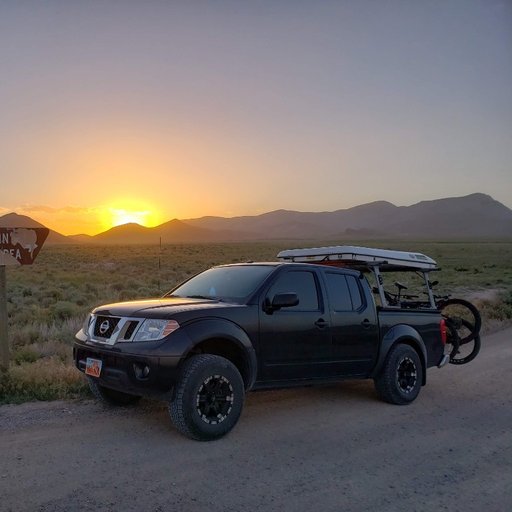
What GVWR actually limits
Gross Vehicle Weight Rating (GVWR) is the maximum loaded weight the manufacturer certifies for the complete vehicle—chassis, body, fluids, passengers, cargo, and permanently attached equipment. It is an engineering and regulatory limit, not a suggestion based on how squat looks in the driveway.
That ceiling exists because specific subsystems fail in predictable ways when overloaded: brake rotors and pads cannot dissipate heat fast enough on long downgrades; axle shafts and hub bearings see higher shear and bending loads; frame rails and body mounts accumulate stress cycles at attachment points; tires exceed load index and overheat.
Overlanding stacks weight differently than commuting—rooftop tents (RTTs), drawer systems, steel bumpers, water, and recovery gear add curb weight before you add people. Forum photos rarely show a commercial truck scale (CAT scale) ticket next to the build.
GVWR vs payload vs GAWR on your door sticker
Your door-jamb placard lists GVWR, Gross Axle Weight Rating (GAWR) for the front and rear axles, tire size, and recommended cold pressure. Payload capacity on consumer trucks is commonly discussed as GVWR minus curb weight—but your exact trim, options, and fuel level move the number. Treat dealer brochure payload as marketing shorthand.
PayloadGVWRCurb weight
GVWR = Gross Vehicle Weight Rating
GAWR matters when you load unevenly: a bed-mounted RTT and rear drawer system bias weight to the rear axle; a heavy winch bumper loads the front. You can be under GVWR while exceeding a single axle rating—especially with passengers and tongue weight from a trailer.
Gross Combined Weight Rating (GCWR) enters when you tow. A loaded overland rig plus a camp trailer can approach combined limits even when the truck bed still has "room" on paper.

The door jamb placard is the legal authority for your vehicle's payload capacity.
Wikimedia Commons — tire placard example
GVWR, payload, and axle ratings — what each measures
Door-jamb placard is the authority for your VIN—not forum builds or dealer brochures.
| Term | What it measures | Changed by lift / air bags? |
|---|---|---|
| GVWR (Gross Vehicle Weight Rating) | Maximum loaded weight the manufacturer certifies for the vehicle as a system—frame, axles, brakes, tires, and powertrain. Set by original equipment manufacturer (OEM) engineering limits, not by how level the truck looks. | No — aftermarket suspension does not raise GVWR. |
| Curb weight | Weight of the vehicle ready to drive with fluids and a full fuel tank—no passengers or cargo. The scale reading before you load gear. | Yes — heavier bumpers, racks, and skids increase curb weight and shrink usable payload. |
| Payload | Cargo + passengers + accessories the vehicle may carry. Editorial shorthand: payload ≈ GVWR − curb weight (verify on your placard). | Indirectly — mods add curb weight, so effective payload drops even when GVWR is unchanged. |
| GAWR (Gross Axle Weight Rating) | Per-axle weight ceiling. You can be under GVWR but over an axle limit when gear, RTTs, or tongue weight stack forward or aft. | No — axle ratings are separate certified limits. |
| GCWR (Gross Combined Weight Rating) | Maximum weight of vehicle plus trailer when towing. Relevant when a loaded rig also pulls a camper or utility trailer. | No — hitch and cooling packages do not rewrite GCWR. |
The suspension myth: springs, air bags, and lift kits
Heavy-duty leaf springs, overload packs, and air-bag helpers are legitimate tools—they support the chassis under load, reduce bottoming, and can restore ride height when the truck sags. They do not rewrite GVWR, GAWR, or the brake system's heat budget.

Visual frame sag indicates you are approaching or exceeding your axle and spring limits.
David French — Unsplash
Factory GVWR is certified with specific spring rates, damping, tire load index, and brake sizing. Aftermarket suspension changes how the vehicle sits and rides; it does not re-certify the vehicle for higher gross weight. No amount of leveling looks like legal headroom on a scale.
Lift kits add height at rest but do not change rated limits. Larger tires may help approach angles when sized correctly—they still must match placard load index and pressure. If the only fix for sag is more spring, you are past sensible payload—not under-sprung.
Suspension upgrades vs certified weight limits
Level ride height ≠ legal headroom. Only OEM re-rating (rare) or a different vehicle changes GVWR.
| Modification | Ride / sag effect | GVWR / legal payload |
|---|---|---|
| Heavy-duty leaf springs / overload packs | Levels sag; may restore ride height under load | Does not increase GVWR, GAWR, or legal payload |
| Air bags / helper air springs | Supports sag; improves stability feel when loaded | Does not change certified ratings—only how the chassis sits |
| Lift kit (coil/spacer) | Increases static ride height; may reduce effective clearance under load | No rating change; can alter handling and brake balance |
| Larger tires (same load index) | Nominal clearance gain at rest | GVWR unchanged—verify load index and placard tire spec |
| CAT scale + placard audit | N/A | Reveals actual axle and total weight vs limits—only way to know margin |
Why owners ignore GVWR anyway
Payload threads repeat the same rationalizations—understand them so you do not mistake confidence for capacity. None of these arguments change your door placard, brake sizing, or what a scale reads after you bolt on camp gear.
The safety-margin myth: owners argue that manufacturers pad GVWR for "worst-case" liability and that shared parts across trim tiers mean a few hundred pounds over the sticker is "fine." Engineering margins exist—but they protect heat cycles on brakes, bearing life, and lawsuit exposure across millions of miles, not your specific RTT-plus-armor build on a long downhill.
The aesthetics trap: heavy-duty springs or air bags restore rake and ride height, so the truck feels "handled" again. That is the suspension myth in emotional form—level looks healthy while GAWR, tire load index, and brake reserve are unchanged. Some owners even treat stock payload as whatever the factory leaf pack allows before bump stops engage; bump-stop contact is not a certified gross weight rating.
The overseas upgrade cop-out: in Australia and similar markets, re-certified Gross Vehicle Mass (GVM)—the same concept as GVWR—can rise after engineered suspension, brake, and tire packages from suppliers like Dobinsons or ARB. Those kits are jurisdiction-specific re-homologation, not proof that a U.S. door placard moved because you installed stiffer rear leaves. Pointing at a loaded Hilux in another country with different tires, laws, and decades of maintenance history is not a payload strategy for your VIN.
Operating over GVWR: liability and insurance
The Legal & Financial Reality:
Exceeding GVWR on public infrastructure is not a harmless overlanding aesthetic choice. In a crash or component failure—brake fade on a grade, ball-joint separation, tire blowout—operating above certified weight shifts civil liability toward the owner because the vehicle was used outside manufacturer limits.
Insurance policies expect the vehicle to remain within rated capacities. Documented overloading after a loss can complicate claims even when the failure mode is not obviously weight-related. That risk is separate from whether you "got away with it" on forest roads.
This is why we treat placard math and scale weights as pre-trip homework—not forum debate. A two-night shakedown with full fuel, water, and camp load on a commercial truck scale costs less than one disputed claim.
Structural optimization: materials and gear mass
The productive fix is weight-to-yield strength: keep protection where stress concentrates, delete mass everywhere else. Full steel front and rear bumpers, welded skids, and drawer boxes routinely add 400–600 lb of curb weight before camp gear—directly shrinking payload without touching GVWR on the sticker.
Aluminum replacements on bumpers, skids, and sliders often save roughly 30–40% mass versus equivalent steel fabrications when yield strength still matches your contact points (rock sliders may still warrant steel if they are sacrificial). Winch mass is largely fixed—mount design is the swap margin.
Gear selection follows the same rule: multi-use, low-mass systems beat single-purpose heavy kit. A composite recovery board set replaces dead weight; a 12V fridge sized to trip length beats a residential cooler full of ice; ground tents beat RTTs when payload math says no. overland gear list publishes editorial weights so you can stack categories before purchase.
Material swap ledger — editorial weight deltas
Typical installed weight deltas—verify on a scale before trusting savings.
| Component | Steel (lb) | Aluminum (lb) | Savings | Notes |
|---|---|---|---|---|
| Front bumper (full replacement) | 185 lb | 115 lb | 70 lb | ~38% lighter; verify crash structure and winch mount rating |
| Rear bumper (full replacement) | 140 lb | 90 lb | 50 lb | Savings compound with tire carrier delete vs swing-arm steel |
| Rock sliders (pair) | 120 lb | 75 lb | 45 lb | Aluminum may sacrifice slide durability—match material to rock contact |
| Skid package (engine + transfer + fuel) | 95 lb | 55 lb | 40 lb | Multi-use: one aluminum skid vs three steel plates |
| Winch + steel mount (12k class) | 85 lb | 85 lb | 0 lb | Winch mass is fixed—mount material is the only swap margin |
| Drawer system (bed) | 180 lb | 120 lb | 60 lb | Plywood/aluminum hybrid builds often beat welded steel boxes |
Platform payload math (Overland Match profiles)
We model three gear profiles on catalog payload: weekend (~300 lb gear penalty), rooftop-tent (RTT) overland (~550 lb), and heavy armor (~900 lb)—plus 300 lb for two occupants in every row. Remaining-payload columns use our editorial load model across platforms—not a replacement for your placard.
Mid-size trucks hit our editorial overload threshold (<100 lb remaining) sooner than full-size platforms when RTT and armor stack. That pattern shows up in owner discussions about Tacomas and Frontiers more often than F-150s—not because Toyota is weak, but because footprint and payload baseline are smaller.
Use the table below to see where your candidate platform lands, then open the rig page for clearance and cargo tradeoffs. If heavy armor remaining is negative in our editorial model, the answer is usually a different platform—not stiffer rear springs.
Remaining payload by platform (Overland Match load profiles)
Cells below 100 lb remaining highlight our editorial overload threshold—not a legal GVWR calculation.
| Platform | Factory payload | Weekend remaining | RTT remaining | Heavy armor remaining |
|---|---|---|---|---|
| Nissan Frontier (2nd gen / D40, 2005–2021) | 1,520 lb | 920 lb | 670 lb | 320 lb |
| Toyota Tacoma (3rd gen, 2016–2023) | 1,395 lb | 795 lb | 545 lb | 195 lb |
| Toyota Tundra (3rd gen, 2022+) | 1,940 lb | 1,340 lb | 1,090 lb | 740 lb |
| Ford F-150 | 2,350 lb | 1,750 lb | 1,500 lb | 1,150 lb |
Compare full specs on each rig page. Your placard may differ from the factory payload used as the table baseline.
Interactive payload & margin calculator
Use values from your door-jamb placard. Gross Vehicle Weight Rating (GVWR) minus curb weight is certified payload; remaining margin subtracts occupants and gear below.
Fixed armor
Certified payload (GVWR − curb)
1,300 lb
Allocated load
415 lb
Remaining usable payload
885 lb
Total mass: 5,115 lb · GVWR limit: 6,000 lb
Overland Match editorial threshold: warn when remaining payload drops below 100 lb. Verify your door placard and a CAT scale before trip load.
FAQ
Does a lift kit increase GVWR? No. It changes ride height and geometry—not certified gross weight.
Do air bags increase payload? They support load and reduce sag; they do not raise GVWR or GAWR.
Is GVWR the same as towing capacity? No. Towing uses GCWR and hitch ratings; payload is what the truck carries on itself.
How do I know if I am over GVWR? Weigh the loaded vehicle on a truck scale (total and per-axle if available) and compare to the door placard.
What is a safe payload for overlanding? Whatever your placard allows after curb weight, occupants, and mods—our <100 lb remaining threshold is an editorial warning band, not a legal standard.
Steel or aluminum bumpers for overlanding? Aluminum saves mass when structure and mounting are engineered; steel still wins where the part is a wear surface. Weigh what you actually bolt on.
Read next


 Index
Index