What overlanding means
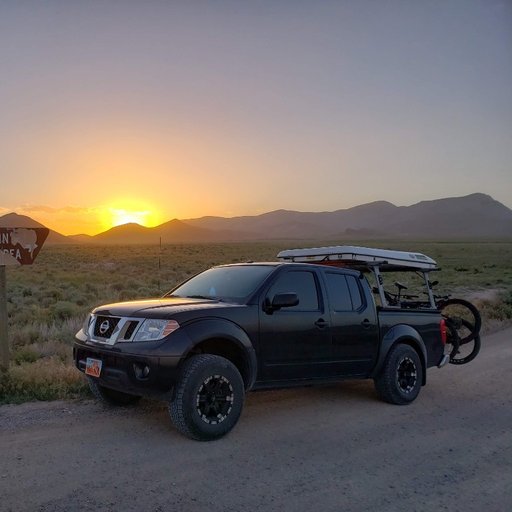
Overlanding is self-reliant travel to remote places where the vehicle is your base camp. You carry what you need to sleep, eat, navigate, and recover without assuming a hotel, restaurant, or tow truck is around the corner. Trips can be a long weekend on Utah's San Rafael Swell forest roads or a multi-week traverse—the mindset is the same even when mileage changes.
The vehicle matters, but overlanding is not a spec-sheet contest. Dealer brochures list empty-truck payload; once you add a rooftop tent, water, and recovery gear, real limits show up on the door placard. On a mid-size truck like the Nissan Frontier D40, our RTT load profile consumes ~550 lb before passengers—leaving roughly 670 lb remaining with two occupants.
Overland Match cites factory payload, clearance, and cargo so you can compare platforms before you shop listings. Always verify GVWR and payload on your exact trim before you load up.
What does overlanding mean?
In plain language, the meaning of overlanding is travel where the journey and self-sufficiency matter as much as the destination. You are not just driving to a campsite—you are relying on your rig and kit to handle rough roads, weather, and nights away from services.
Search forums and you will see debates about whether a Subaru on a forest road counts. Our bar is practical: if you plan routes, pack recovery and sleep gear, and camp where services are thin, you are in the overlanding conversation—even if your build is stock.
Overlanding does not require international borders or a $100k build. It does require honest payload math, basic recovery, and navigation that works offline.
What it is not
Not the same as car camping. Pulling into a developed campground with hookups and a fire ring is great—it just is not overlanding. Overlanders usually seek dispersed sites, BLM land, or trail-side camps where you manage water, trash, and waste yourself.
Not the same as rock crawling. Hardcore 4×4 parks and winch lines are their own sport. Many overlanders never need a locker; they need reliability, range, and sleep systems for miles of gravel and mud.
Not the same as #vanlife luxury. Built-out vans count when they go remote—but overlanding is not defined by quartz counters. A stock SUV with a ground tent and a recovery kit qualifies if the trip is the point.
Not the same as a pavement-only road trip. Covering highway miles between hotels is touring. Overlanding adds off-pavement access and camp systems so you can stay out without a reservation.
Overlanding vs similar activities
Our practical bar: planned routes, recovery + sleep gear, and dispersed camp where services are thin.
| Activity | Typical duration | Campsite type | Self-sufficiency | Overlanding? |
|---|---|---|---|---|
| Overlanding | 2 nights – 3+ weeks | Dispersed / BLM / trail-side | Sleep, water, recovery, offline nav | Yes — definition |
| Car camping | 1–3 nights | Developed campground + hookups | Camp store / restrooms nearby | No |
| Rock crawling | Half–full day | Pavement home same night | Spotter + tow truck culture | No |
| Pavement road trip | Multi-day | Hotels / booked sites | Services every exit | No |
| #Vanlife (urban) | Open-ended | Street / RV park | Hookups / laundromats | Only when routed remote |
Rig + gear basics
You need two things: a capable overlanding vehicle and a baseline of overlanding gear. The vehicle hauls people, fuel, and kit; the gear keeps you fed, found, and unstuck when pavement ends.
Starter gear stacks in this order with editorial weights: all-terrain tires (~24 lb) → air & deflator (~19 lb) → tire repair (~3 lb) → recovery boards (~17 lb) → straps (~12 lb) → shovel (~5 lb) → water (~58 lb) → first aid (~12 lb) → navigation (0 lb) → sleep (~34 lb ground tent) → comms (~5 lb) → power (~14 lb). Our overlanding gear list walks each category with three brand picks.
Do not buy everything at once. Run a two-night shakedown on a BLM dispersed route within cell range, note what broke or felt sketchy, then upgrade one category at a time.
Starter gear stack — buy order with editorial weights
Rows 1–8 target a ~300 lb weekend profile; rows 9–10 upgrade to RTT overland tier.
| Order | Category | Example gear | Weight | Running total |
|---|---|---|---|---|
| 0 | All-terrain tires | Falken Wildpeak A/T3W (4) + matched spare | 24 lb | 24 lb |
| 1 | Air + deflator | Viair 400P + ARB E-Z Deflator + gauge | 19 lb | 43 lb |
| 2 | Tire repair | ARB Speedy Seal plug kit + valve tools | 3 lb | 46 lb |
| 3 | Recovery boards | MAXTRAX MKII (pair) | 17 lb | 63 lb |
| 4 | Recovery straps | Rated snatch strap + bow shackles | 12 lb | 75 lb |
| 5 | Shovel | DMOS Stealth or full-size off-road shovel | 5 lb | 80 lb |
| 6 | Water | 7 gal RotopaX + mount | 58 lb | 138 lb |
| 7 | First aid + fire | Adventure medical kit + extinguisher | 12 lb | 150 lb |
| 8 | Navigation + offline maps | Gaia GPS + downloaded MVUM layers | — | 150 lb |
| 9 | Sleep (weekend) | Ground tent + 2 sleeping bags | 34 lb | 184 lb |
| 10 | Comms | Garmin inReach Mini 2 + GMRS handheld | 5 lb | 189 lb |
| 11 | Power | Jackery Explorer 500 (or equivalent) | 14 lb | 203 lb |
| 12 | Hi-lift / jack (optional) | Bottle jack + base plate — farm jack if trained | 32 lb | 235 lb |
| 13 | RTT upgrade (overland tier) | Prinsu rack + Ikamper Skycamp 2.0 | 250 lb | 485 lb |
| 14 | Fridge upgrade (overland tier) | ICECO VL45 Pro slide-in | 43 lb | 528 lb |
Overlanding vehicles
There is no single best rig. Mid-size trucks like the Nissan Frontier (D40) excel when you want a bed and modest trail width; body-on-frame SUVs like the Toyota 4Runner pack people and gear behind one roofline; full-size platforms such as the Y62 Armada/Patrol family tow and haul but pinch on tight two-tracks.
Browse the overlanding vehicles directory for factory payload, clearance, and cargo on every platform we track. Take the five-question quiz to weight budget, terrain, and sleep style if you want a ranked shortlist instead of alphabet soup.
Used market value varies wildly by region. A platform that is common in the U.S. may be an import conversation elsewhere—check our market flags on each rig page before you fixate on one nameplate.
Platform payload snapshot (editorial model)
Remaining payload below 100 lb triggers our overload warning on rig pages.
| Platform | Stock payload | Clearance | Weekend remaining | RTT remaining |
|---|---|---|---|---|
| Nissan Frontier (2nd gen / D40, 2005–2021) | 1,520 lb | 9.1″ | 920 lb | 670 lb |
| Toyota 4Runner | 1,700 lb | 9.6″ | 1,100 lb | 850 lb |
| Toyota Tundra (3rd gen, 2022+) | 1,940 lb | 10.6″ | 1,340 lb | 1,090 lb |
| Jeep Wrangler | 1,100 lb | 10.8″ | 500 lb | 250 lb |
| Ford F-150 | 2,350 lb | 9.4″ | 1,750 lb | 1,500 lb |
| Nissan Armada (Y62 platform) | 2,050 lb | 10.2″ | 1,450 lb | 1,200 lb |
Trail rigs vs overlanding rigs
A trail rig is a capable 4×4 set up for rough two-tracks—not a mall crawler and not a dedicated rock buggy. Trail rigs need clearance, gearing, and recovery basics to reach camp; overlanding rigs add range, sleep, and living systems for multi-day routes.
Many vehicles do both. A lightly built mid-size truck with all-terrain tires and a ground tent is a trail rig for weekend routes and an overlander once you add navigation, water, and power for longer trips.
If technical terrain is your priority, start with our ranked trail rigs hub—then compare factory specs on the rig pages before you buy armor or a rooftop tent.
Trail rig vs overlander — system-by-system
| System | Trail rig minimum | Overland add-on |
|---|---|---|
| Tires (all-terrain minimum) | Sized for daily driving + dirt | Same — pressure management matters more |
| Recovery | Traction boards + strap | Winch + snatch block on remote routes |
| Sleep | Ground tent or bed platform | RTT or in-vehicle camp (multi-day) |
| Water | 2–3 gal weekend | 7+ gal + gray-water plan |
| Power | Phone battery + 12V outlet | Portable station or dual-battery |
| Navigation | Offline maps downloaded | Sat messenger + paper backup |
| Payload math | ~300 lb gear profile (weekend) | ~550 lb RTT profile (+250 lb vs weekend) |
Where to start
If you are new, pick a two-night trip within cell range, pack the recovery and sleep basics, and learn what your vehicle burns in fuel on dirt. Upgrade gear when a real trip exposes a gap—not when a forum thread shames your stock ride.
When you are ready to narrow platforms, take the matcher quiz, then build your kit from the gear guide. Our $500 overland build walks essential gear on a budget without a rooftop tent. If you already own a Nissan Frontier or Y62-based SUV, read our trail-rig modification guide for tiered build paths that respect payload.
Overlanding rewards preparation over horsepower. The best first mod is usually tires, air, and traction—not a lift kit you never use.
FAQ
Is overlanding expensive? It can be, but entry looks like a reliable used 4×4, a sleep system, and recovery basics—not a six-figure expo build. Budget for tires, maintenance, and fuel on dirt.
Do I need 4WD? For serious mud, sand, or rocky climbs, yes. For graded forest roads to dispersed camp, many all-wheel-drive crossovers work if you respect clearance and weather. Our guide on overlanding without 4x4 covers ground clearance vs 4WD, trail damage from wheel spin, and essential 2WD recovery gear.
How is overlanding different from off-roading? Off-roading often means a day on hard trails and home to pavement. Overlanding adds distance, camp, and self-sufficiency between trail sections.
What is the best overlanding vehicle? The one that matches your people count, budget, terrain, and sleep style. Use the quiz rather than chasing forum favorites.
Can I overland in a sedan? Not realistically for remote routes. You need clearance, cargo, and usually 4×4 or serious AWD for the roads overlanders actually use.
Read next


 Index
Index