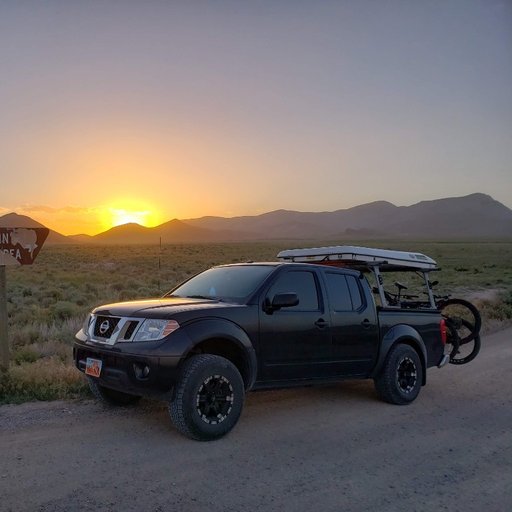
Size, payload & what you can actually carry
Our editorial shorthand puts F-150 payload roughly a thousand pounds above Tacoma—meaning drawers, fridge, water, RTT, and passengers stack with more headroom on the full-size. Tacoma fights back on ease of loading a short bed and lower entry price. Reddit "F-150 or Tacoma?" posts often reveal the buyer never needed full-size towing—just wanted a bed.
Highway miles & camp access
F-150 is the comfortable long-leg hauler: quieter at speed, more rear seat for kids, more cupholders than you deserve. Tacoma is easier in city parking, tight camp loops, and gas-station maneuvering. If your overland is mostly interstate to public land, F-150 fatigue wins; if it is forest-service spurs and urban daily duty, Tacoma feels right-sized.
Trail & clearance reality
Stock clearance is similar in our catalog (high-nine inches)—neither is a Wrangler. F-150's width and wheelbase show up on narrow trails; Tacoma fits where full-size owners get out to spot. Tremor/Raptor fantasies aside, most overland F-150s are XLT/XT trims with modest lifts and all-terrain tires—not stadium trucks.
Money & configuration maze
F-150's trim matrix is enormous—easy to overbuy capability you never use. Tacoma TRD specs are narrower and well documented in forums. Compare out-the-door price with the build you actually want (rack, topper, recovery), not the base MSRP on the configurator.
Side by side
Bench two rigs
Neutral explorer presets (mid budget, rooftop tent vibe, capability emphasis). Match % is directional—take the quiz to weight your own priorities.
Editorial baseline

Editorial baseline

| SPEC | FORD F-150 | TOYOTA TACOMA (4TH GEN) |
|---|---|---|
| MATCH % (ED.) | 84% | 76% |
| PLATFORM | Ford F-150 | Toyota Tacoma (4th gen) |
| PRICE BAND (ED.) | $38k – $72k new | $39k – $63k new (hybrid trims higher) |
| RELIABILITY (ED.) | 8/10 | 8/10 |
| FACTORY GROUND CLEARANCE | 9.4″ | 9.9″ |
| FACTORY PAYLOAD (EMPTY) | 2,350 lb | 1,715 lb |
| CARGO (CU FT, APRX.) | 58 cu ft | 41 cu ft |
| TRAIL REALITY: TYPICAL OVERLANDING BUILD (RTT + FRIDGE SETUP) | ||
| REMAINING PAYLOAD (LOADED) | 1,500 lb | 865 lb |
| EFFECTIVE GROUND CLEARANCE (LOADED) | 8.7″ | 9.2″ |
| What is your target budget for the base rig | 5/5 | 4/5 |
| Who is coming along, and how heavy do you pack | 5/5 | 3/5 |
| What is your preferred sleep setup | 4/5 | 3/5 |
| What is the toughest terrain you realistically plan to tackle | 4/5 | 5/5 |
| What matters most to you | 3/5 | 4/5 |
Common questions
- Do I need full-size for a roof-top tent?
- No—both run RTTs on bed racks routinely. F-150 gives you more payload margin once the tent and rack are on; Tacoma demands tighter payload math. Check roof load and gross weight on your specific trim.
- Is an F-150 too big for overlanding?
- Too big for tight technical trails and some camp spots—not too big for the majority of graded dirt to dispersed sites. Match truck size to the routes and parking you actually use.
- Used Tacoma vs new F-150 at similar payment?
- Classic cross-shop. New F-150 = warranty and size; used Tacoma = known platform and lower operating cost. Factor insurance, fuel, and build budget—not just monthly payment.
- Which holds value better?
- Both hold value relative to the market. Tacoma TRD specs can be stubbornly expensive used; F-150 volume means more choice but also more depreciation on high-trim trucks.
Real builds on these platforms
No one has shared a real build on Ford F-150 or Toyota Tacoma (4th gen) yet.
Already have a Ford F-150?
Read next




 Index
IndexStill torn?
Five questions on terrain, budget, and sleep style—get a shortlist with match scores tailored to how you actually camp.
Take the quiz →Factory payload, clearance, and cargo from manufacturer ratings — trim and year vary; verify on the door placard. Remaining-payload after occupants and gear is the Overland Match editorial load model.